

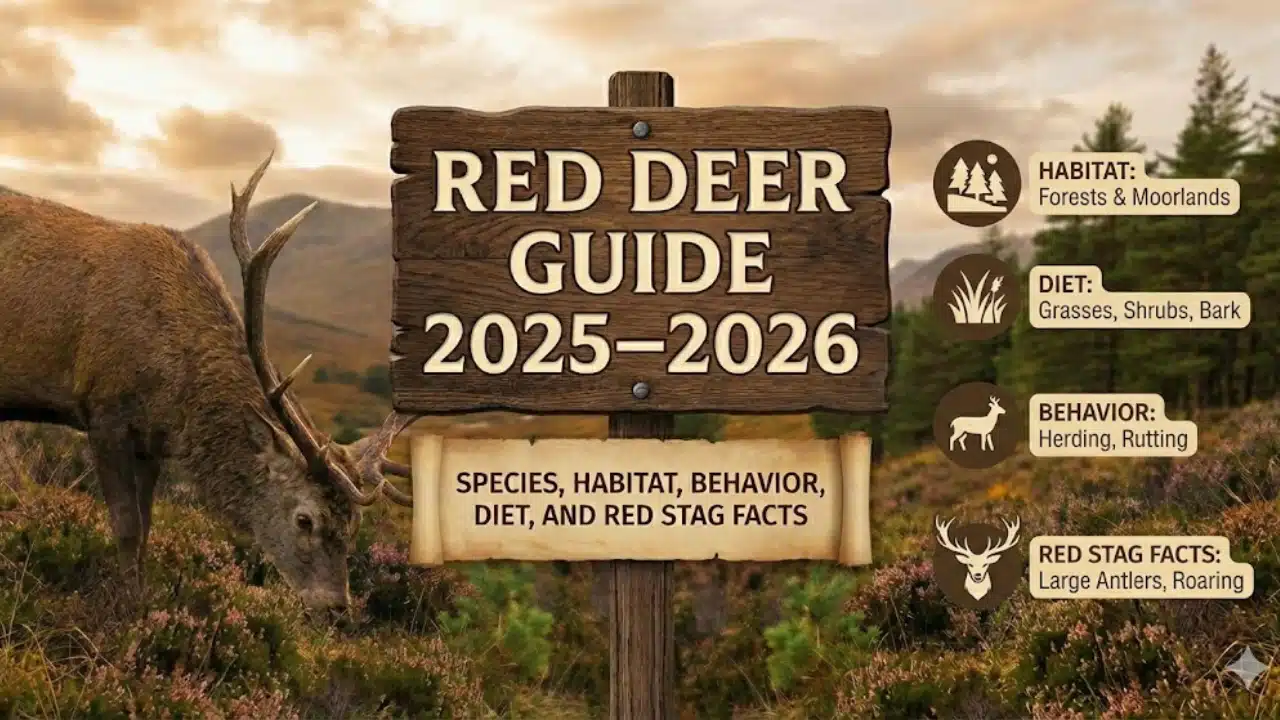
The red deer is one of the most well-known and admired wild animals in the world. With its reddish coat, branching antlers and dramatic autumn rut, the species has influenced European culture, shaped ecosystems and attracted wildlife researchers and photographers for centuries. Today red deer live not only across Europe but also in parts of Asia, North Africa, New Zealand, Canada and select regions of North America.
This complete guide for 2025–2026 explores what makes the red deer unique, where it lives, how it behaves, what it eats, how large it grows and how it compares to related species such as elk. It also explains common questions involving deer vision, venison, red stags and global population trends.
What Is a Red Deer
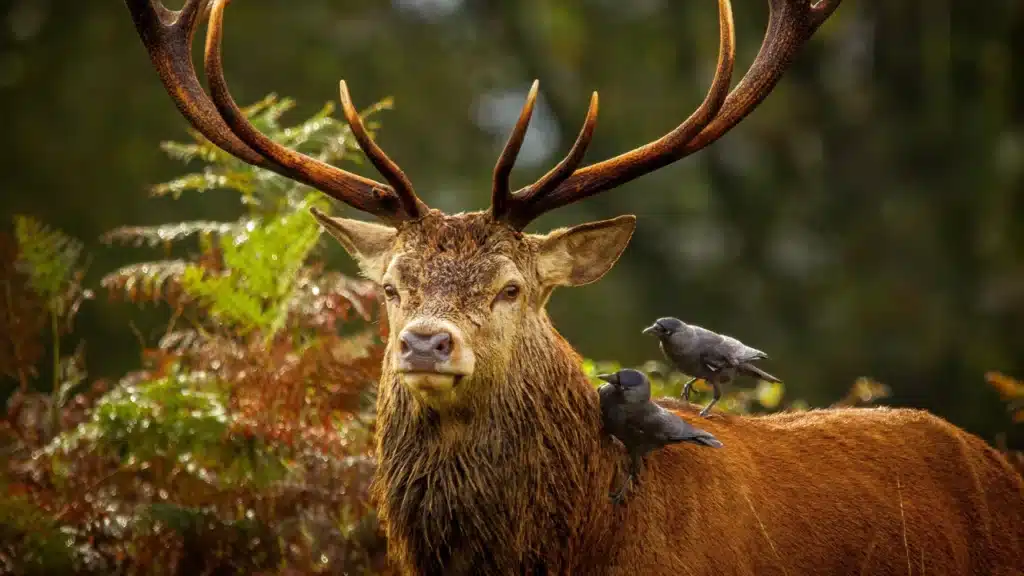
The red deer is a large mammal belonging to the deer family. Its scientific name is Cervus elaphus. Males are known as stags, females as hinds and the young as calves. The species is recognized by:
- A reddish-brown summer coat
- A darker winter coat
- A pale rump patch
- Long legs and an athletic build
- Antlers that grow and are shed annually by stags
Red deer are among the largest deer species on earth and have been part of human history, mythology and hunting culture for thousands of years.
Where Red Deer Live
Native Regions
Red deer naturally occur across:
- The British Isles
- Scandinavia
- Western, Central and Eastern Europe
- The Caucasus and parts of western Asia
- The Atlas Mountains of North Africa
These regions offer forests, mountains, grasslands and heathlands where red deer thrive.
Introduced Regions
Humans have introduced red deer to several continents:
- New Zealand
- Australia
- Argentina, Chile, Uruguay and parts of Peru
- Limited areas of North America and Canada
These introduced herds have become well established in some countries. In New Zealand, for example, red deer are now a major part of the landscape and outdoor culture.
Red Deer in Canada and North America
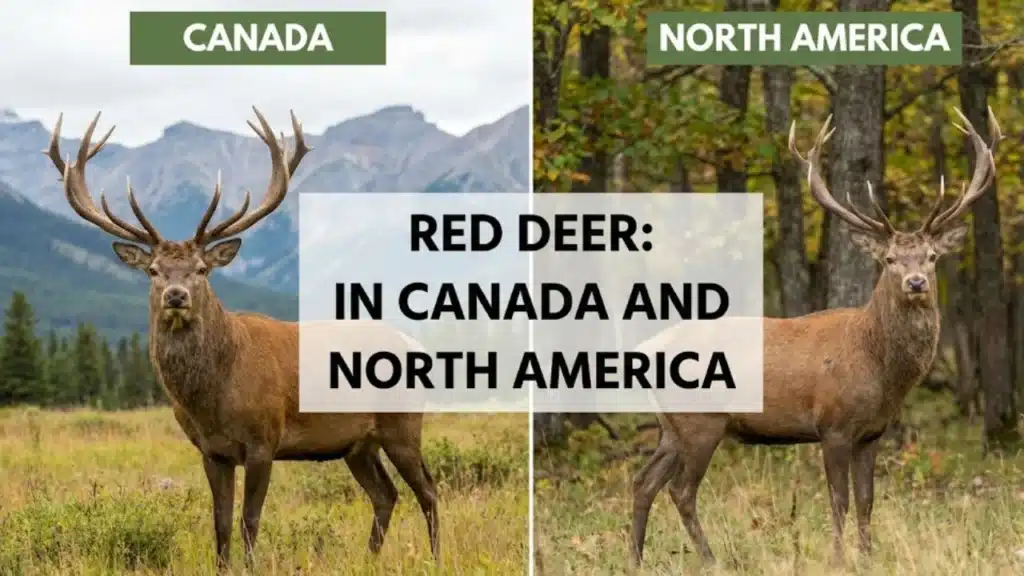
Red deer are not naturally native to North America. However, they exist today because of introductions to:
- Private estates
- Farmed venison operations
- Controlled hunting areas
- Isolated wild areas where animals escaped captivity
In Canada, regions such as Alberta host managed red deer and red stag populations. Some of these animals are maintained for farming, wildlife tourism or carefully regulated hunting experiences.
Red Deer Species and Subspecies
The red deer includes several regional forms that vary slightly in size, antler structure and coloration. These include:
- European red deer
- Scottish red deer
- Irish red deer
- Central Asian red deer
- North African Barbary stag
Each subspecies has adapted to its environment over thousands of years, resulting in a diverse and widespread family.
What Is a Red Stag
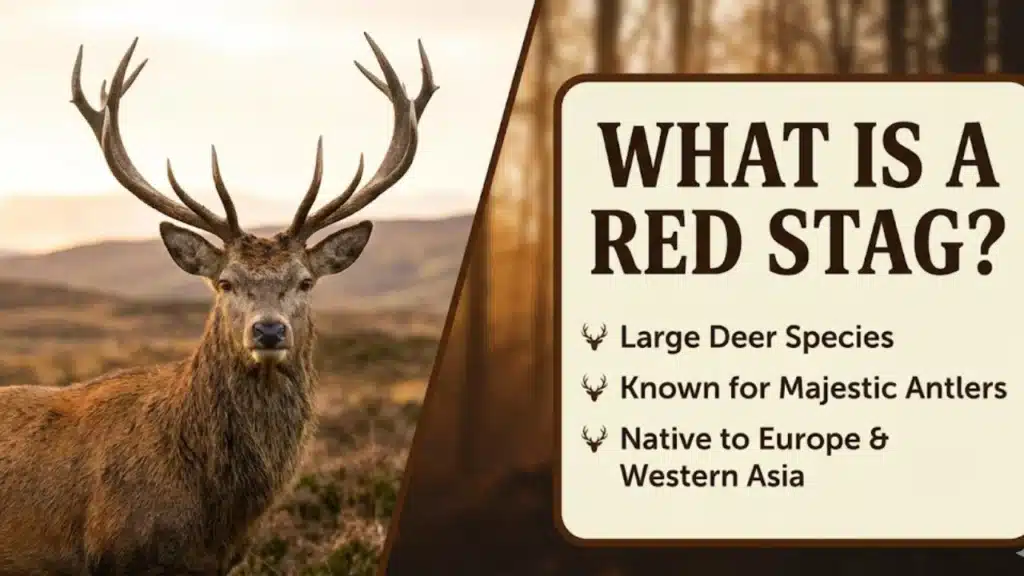
A red stag is an adult male red deer. Stags are larger than hinds and grow impressive branching antlers each year. During the rut they develop a muscular neck, produce loud roaring calls and compete with rivals for breeding access to hinds.
The term “red stag” is often used when describing trophy-sized males, particularly in contexts such as wildlife photography and guided hunting in countries like Scotland and New Zealand.
Size and Physical Characteristics
Red deer vary in size depending on region and habitat.
Typical measurements include:
- Body length between 1.7 and 2.6 meters
- Shoulder height around 1.1 to 1.3 meters
- Weight ranging from 100 to more than 300 kilograms
- Large stags sometimes exceeding these averages
- Antlers that develop multiple tines and form distinctive crowns
Their strong legs and deep chests allow them to travel long distances and climb steep hills with ease.
Habitat and Environment
Red deer prefer landscapes that offer a mixture of open feeding areas and sheltered cover. Common habitats include:
- Woodlands and forest edges
- Mountain sides and upland moorland
- River valleys and wetlands
- Grasslands and heathlands
- Farmland areas, especially in winter
Their adaptability is one reason they have succeeded across so many continents.
What Red Deer Eat
Red deer are herbivores with a diet that changes by season. They commonly eat:
- Grasses and herbs
- Shrubs and heather
- Leaves, twigs and bark
- Young tree shoots
- Agricultural crops when natural food is limited
In winter red deer rely more heavily on woody vegetation. Their feeding habits can shape plant communities, especially where deer densities are high.
Behavior and Daily Patterns
Red deer are social animals with structured herd behavior.
Social Groups
- Hinds and calves live together in herds led by older females
- Stags form bachelor groups during spring and summer
- The two groups mix during the autumn rut
Activity Levels
Red deer are typically most active at dawn and dusk. In areas with human activity they may shift to more nocturnal feeding to avoid disturbance.
The Red Deer Rut
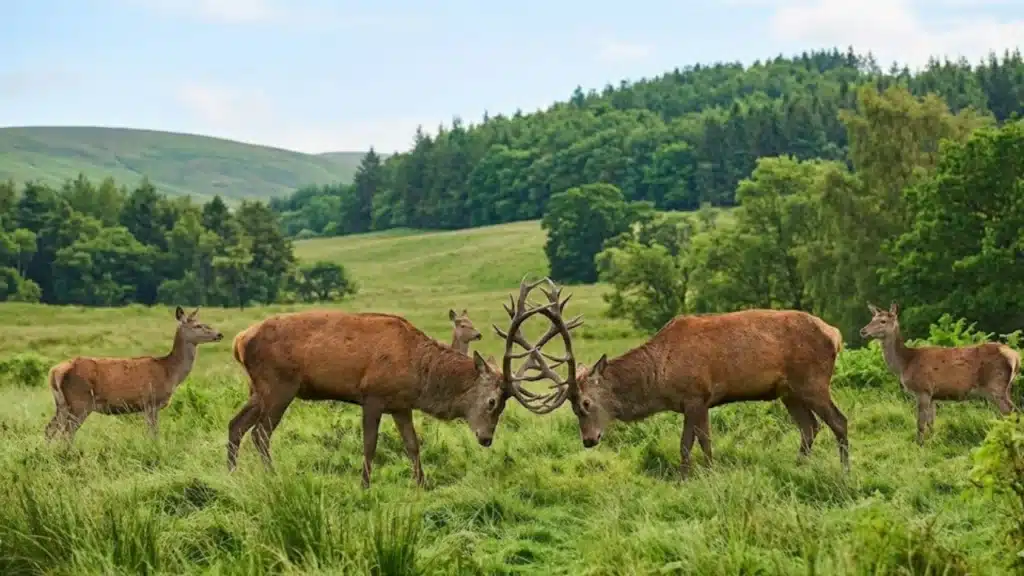
The rut, or breeding season, is one of the most dramatic wildlife events of the year.
During the rut:
- Stags roar loudly to challenge rivals
- They gather groups of hinds known as harems
- They engage in antler battles to establish dominance
- Their movements increase significantly
- Their aggressive displays become more intense
This behavior peaks during late September and October in most regions.
Red Deer Population and Conservation Status
Red deer populations are generally stable or increasing across most of their range. In some areas, numbers have grown enough to impact forests and farmland, requiring population management through regulated harvesting and habitat planning.
Conservation efforts often focus on:
- Maintaining balanced herd sizes
- Restoring woodland habitats
- Protecting historical subspecies
- Supporting biodiversity through responsible land use
In countries with introduced populations, red deer management also helps prevent ecological damage to native plant species.
Is Deer Meat Red Meat
Yes, venison from red deer is considered red meat. This classification is based on its high myoglobin content, which gives the meat its rich red color.
Red deer meat is known for being:
- Lean
- High in protein
- Lower in saturated fat than many farmed meats
- Nutrient dense, with iron and B vitamins
Venison is valued for both its flavor and its nutritional profile.
Can Deer See Red Light or the Color Red
Deer vision research shows that deer see blues and greens clearly but have limited sensitivity to long red wavelengths. Red light appears dim and less noticeable to them.
This is why red lights are often used at night for observing wildlife or moving in the field without alarming nearby animals.
Red Deer and Elk Differences
Although red deer and elk are closely related, they are not the same species.
Key differences:
- Elk are generally larger
- Red deer have richer coat colors
- Elk antlers usually sweep backward, while red deer antlers tend to rise upward and branch into crowns
- Their native ranges differ, with elk originally from North America and Asia and red deer from Europe, Asia and North Africa
In some introduced areas, red deer and elk have hybridized, creating mixed populations.
Interesting Red Deer Facts
- Scientific name is Cervus elaphus
- Males are stags, females are hinds and young deer are calves
- Antlers regrow every year and become more complex as stags mature
- Red deer can adapt to forests, mountains, moorland and farmland
- Some European populations have lived alongside humans for thousands of years
- The rut features some of the loudest vocalizations of any deer species
- Red deer can live 12 to 18 years in the wild
- They play an important role in seed dispersal and forest ecology
Frequently Asked Questions
What is a red deer
A large species of deer native to Europe, parts of Asia and North Africa, recognized for its reddish coat and branching antlers.
Where are red deer found
Throughout Europe and western Asia, the Atlas Mountains and introduced populations in New Zealand, South America, Canada and limited areas of North America.
How big are red deer
Stags typically stand around 1.2 meters at the shoulder and may weigh more than 300 kilograms.
What do red deer eat
Grasses, herbs, shrubs, heather, leaves and bark depending on the season.
Is venison from red deer red meat
Yes, venison is classified as red meat.
Can deer see red light
Deer have limited sensitivity to red wavelengths, making red light appear dim to them.
Are red deer native to North America
No, populations in Canada and the United States descend from introduced animals.
Conclusion
Red deer remain one of the world’s most fascinating mammals. Their adaptability, social complexity and dramatic seasonal behaviors make them a favorite species for wildlife researchers, photographers and outdoor enthusiasts. Understanding red deer habitat, diet, vision, population trends and global distribution helps deepen appreciation for this remarkable species and supports ongoing conservation efforts.