
Most private schools mention “academic support” somewhere on their website. Far fewer explain what that actually means in practice. For families comparing options, it’s worth digging past the phrase itself and asking a more specific question: does this school build support into daily academic life, or is it an add-on service students only access after they’ve already fallen behind?
That distinction matters more than it sounds. A strong Academic Support Private School program isn’t reactive, it’s structural. It shows up in class size, in how teachers track student progress, and in how easily a struggling student can get help without feeling singled out.
Why Faculty Ratio Is the Real Starting Point
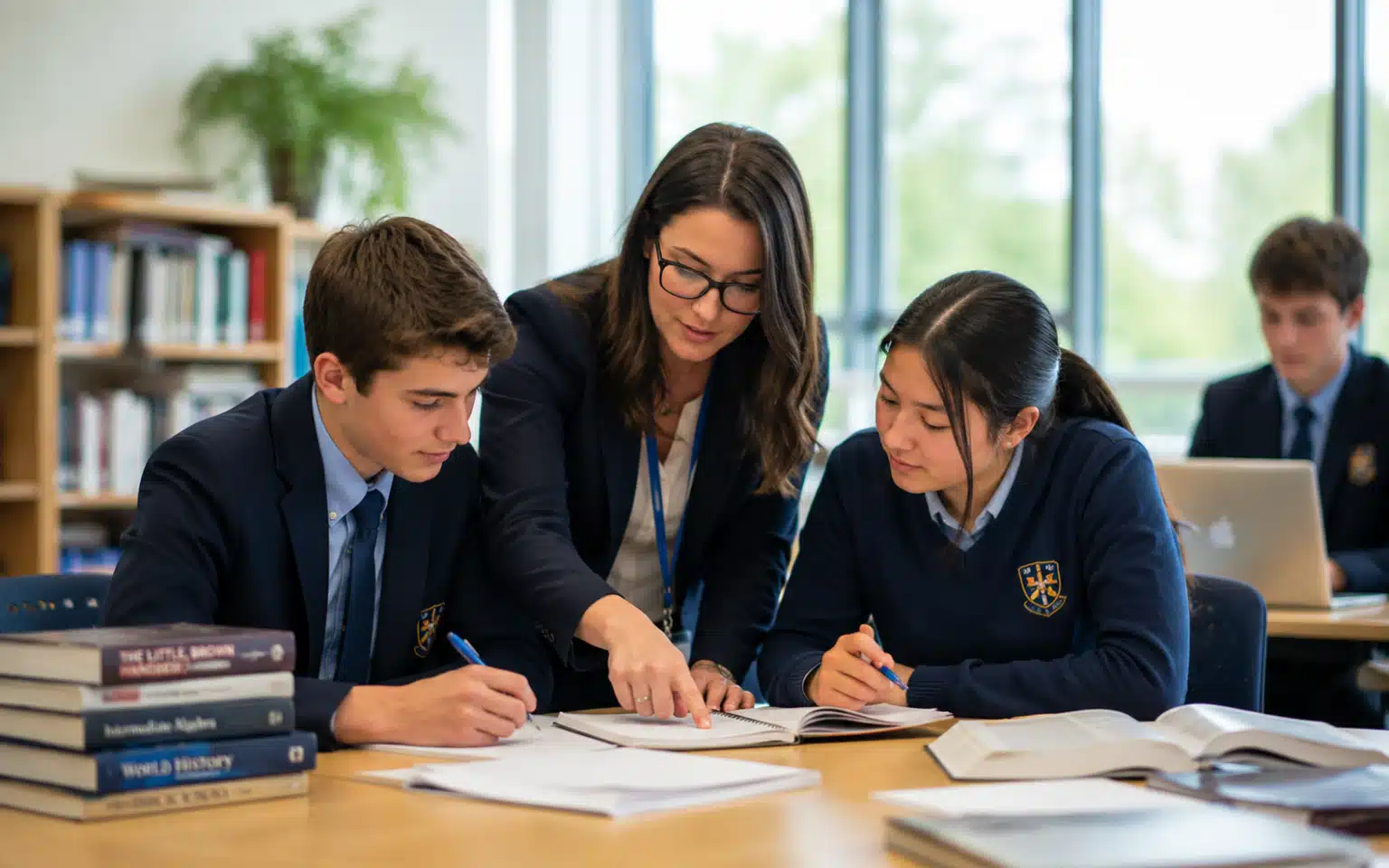
Almost every conversation about academic support eventually comes back to the faculty-to-student ratio. It’s not a vanity metric. A teacher managing six students can notice a gap in understanding within a single class period. A teacher managing twenty-five often can’t, at least not until a test result makes it obvious.
Schools with a low ratio, closer to 1:6 than 1:20, can catch problems earlier and adjust pacing individually instead of applying a one-size-fits-all curriculum. This is the foundation that everything else in a genuine academic support program gets built on.
Support That Runs Alongside Advanced Coursework, Not Instead of It
One misconception families sometimes have is that academic support exists mainly for students who are behind. In well-designed programs, it actually runs in parallel with advanced work, too. A student taking rigorous AP Courses Private High School options still benefits from structured check-ins, targeted tutoring, and adjusted pacing when a specific unit gets difficult; support isn’t reserved only for remedial situations.
The same logic applies to students pursuing an Early College Program High School pathway. Dual enrollment coursework moves at a college pace, and even strong students can hit friction points adjusting to that workload. Schools that pair early college partnerships with real academic support give students a much better shot at finishing those courses successfully rather than struggling silently through them.
Where Counseling and Academic Support Overlap
Academic support doesn’t operate in isolation from college planning either. College Counseling Private High School programs increasingly work hand-in-hand with academic support teams, because course selection and college strategy only make sense in the context of a student’s actual academic standing.
A counselor recommending a heavier course load, for instance, should be coordinating with whoever is tracking that student’s day-to-day performance. When these two functions are siloed, counseling in one office, support in another, students can end up overcommitted without anyone noticing until grades slip. Schools that integrate the two tend to catch that kind of mismatch before it becomes a problem.
What to Ask When Evaluating a School’s Support Program
A few direct questions tend to reveal more than a school’s marketing language:
- How is academic support actually structured: dedicated staff, or teachers doing double duty on their own time?
- Is support available proactively, or only after a student requests it or a grade drops?
- Does the support team coordinate with college counseling and course planning, or operate separately?
- How does support scale for students in advanced coursework or early college programs, not just those who are struggling?
The answers to these questions usually say more about a school’s actual priorities than any admissions brochure will.
How Concord Preparatory School Structures This
Concord Preparatory School, a private boarding and day school in Costa Mesa, California, builds academic support directly into its daily structure rather than treating it as a separate service. With a 1:6 faculty-to-student ratio, the school can identify gaps early and adjust pacing on an individual basis. Support runs alongside the school’s full academic offering, including 40+ AP courses, an Early College Program with partnerships providing up to 70 transferable university credits, and a college counseling process that’s coordinated with academic planning rather than kept separate from it.
Families researching Concord Preparatory School as part of a broader search for Academic Support Private School options can review the school’s approach directly on its academic support page, alongside its wider academics section covering AP coursework, early college partnerships, and college counseling.
Final Thought
Academic support only matters if it’s built into the actual structure of a school, not bolted on as an afterthought. Faculty ratio, coordination between counseling and support teams, and whether the support scales for advanced students as well as struggling ones are the details worth checking before making a decision, far more useful than any single line on a website.