
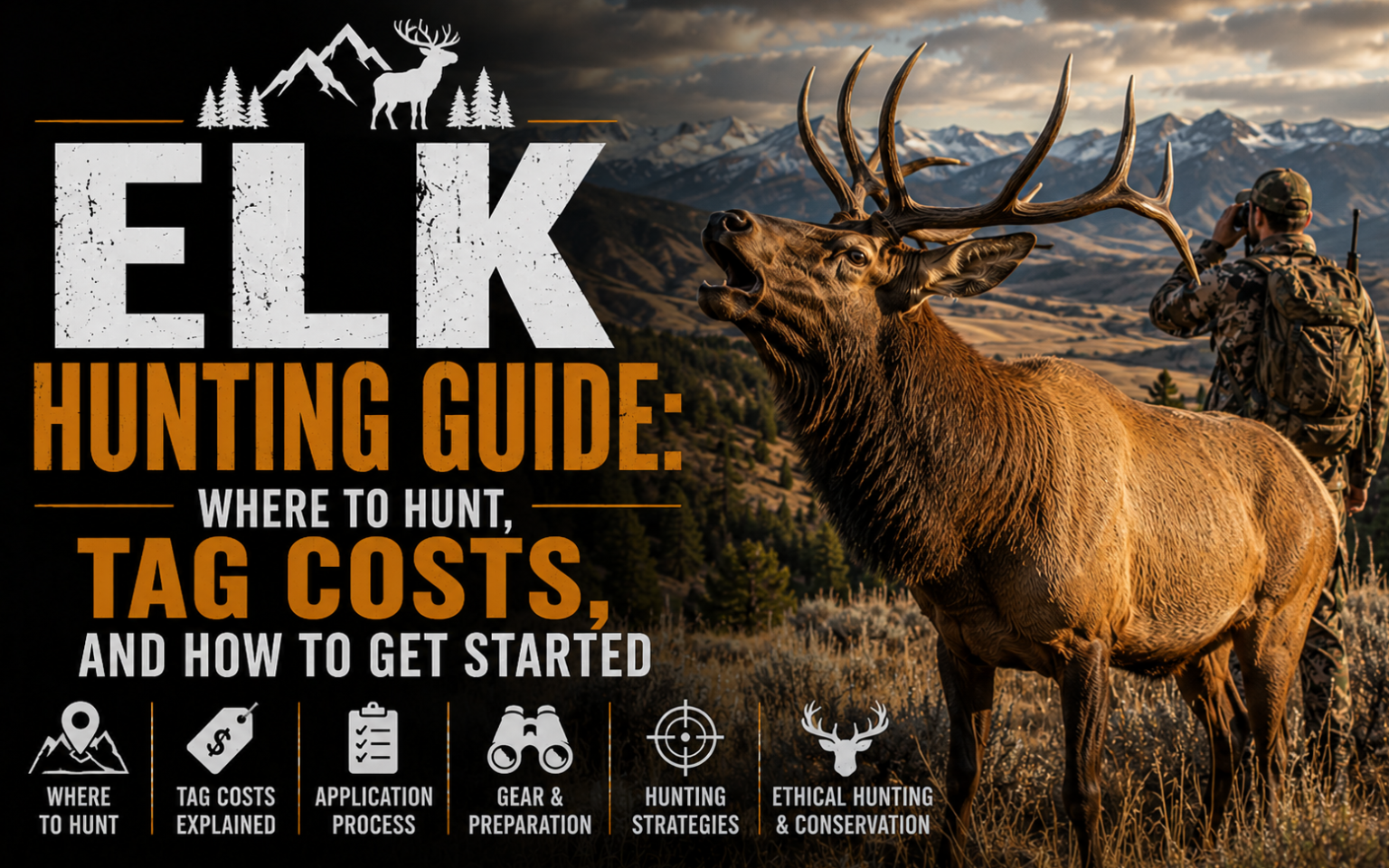
Few hunts capture the imagination quite like elk hunting. The bugle of a rutting bull echoing through a mountain basin, the physical demands of high-altitude terrain, and the reward of packing out one of North America’s largest big game animals make elk hunting a bucket-list pursuit for hunters across the country. Whether you’re planning your first trip or expanding into a new state, here’s what you need to know.
Where Can You Hunt Elk?
Elk populations are concentrated primarily in the Western United States, but a growing number of Eastern states have successfully reintroduced herds as well. If you’re asking where can you hunt elk, the strongest options include:
- Colorado — home to the largest elk population in the country
- Montana — known for rugged wilderness hunts and strong bull-to-cow ratios
- Wyoming and Idaho — excellent public land access and healthy herds
- North Carolina — a smaller, reintroduced population primarily in the Great Smoky Mountains region
- Tennessee — another Eastern reintroduction success story, with limited, highly regulated hunting opportunities
Can You Hunt Elk in North Carolina?
Yes — hunting elk in North Carolina is possible, but extremely limited. The state’s elk herd, centered around the Cataloochee area, is managed through a very restrictive quota hunt system with only a small number of tags issued each year through a lottery draw.
Can You Hunt Elk in Tennessee?
Similarly, hunting elk in Tennessee is legal but tightly controlled. Tennessee’s elk restoration zone in the northern part of the state offers a small number of tags annually through a limited quota draw, making it a rare but achievable opportunity for hunters willing to apply for years to build preference.
Where to Hunt Elk: Comparing Top Destinations
Colorado Elk Hunting
Colorado elk hunting remains the gold standard for hunters seeking abundant public land, strong herd numbers, and multiple season options across archery, muzzleloader, and rifle seasons. The state’s co elk hunting season structure includes early archery, a muzzleloader season, and multiple rifle seasons, giving hunters flexibility in choosing when to hunt.
Montana Elk Hunting
Montana elk hunting is prized for its wilderness character, with many hunts taking place in remote, backcountry terrain accessed by horseback or extended backpack trips. Montana also offers strong general season opportunities on public land for resident and non-resident hunters alike.
Understanding Elk Tags and Costs
Colorado Elk Tag Price and Draw System
One of the most common questions hunters ask is about Colorado elk tag price and how the draw system works. Colorado offers both over-the-counter (OTC) elk tags in many units and limited draw tags in premium trophy units. Co elk tags for OTC units are generally more accessible and affordable, while draw-only units in prime trophy areas require preference points and carry higher costs and longer wait times.
Colorado Non-Resident Elk Tag
For out-of-state hunters, a Colorado non-resident elk tag typically costs significantly more than a resident tag, often running several hundred dollars depending on the season and unit type. Non-residents should also budget for a mandatory habitat stamp and application fees when applying through Colorado’s draw system.
Guided Elk Hunts vs. DIY
Guided elk hunts offer major advantages for hunters unfamiliar with a specific state or region, including access to private land, established camps, and experienced guides who understand local elk movement patterns. These hunts typically range from $4,000 to $10,000+ depending on the state, season, and trophy potential.
DIY public land hunts, by contrast, require more scouting and physical effort but offer significant cost savings — often limited to tag costs, travel, and basic camping or lodging expenses.
How to Choose the Right Elk Hunting Season
Elk seasons vary by state and hunting method:
- Archery seasons typically run during the early rut (September), when bulls are most vocal and responsive to calling
- Muzzleloader seasons often bridge the gap between archery and rifle seasons
- Rifle seasons run through October and November in most Western states, with multiple season splits common in states like Colorado
Checking the elk hunting season dates for your specific state and unit well ahead of time ensures you don’t miss application deadlines or peak activity windows.
Essential Gear for Elk Hunting
- A rifle chambered for at least .270 or larger, or a well-tuned bow setup for archery hunters
- Quality boots built for steep, demanding mountain terrain
- Layered clothing suited to rapidly changing mountain weather
- A reliable pack system for hauling meat out of remote areas
- Cow and bull calls if hunting during the rut
Tips for a Successful Elk Hunt
- Apply early for draw tags, especially in premium units with limited quotas.
- Get in shape before your trip — elk country is physically demanding, often at high elevation.
- Learn to read wind and terrain, since elk rely heavily on scent to detect danger.
- Consider a combo hunt in states like Colorado, where mule deer tags can often be paired with an elk hunt.
- Have a meat plan — packing out an elk requires serious logistics, whether that means pack animals, a game cart, or multiple trips on foot.
Ready to Book Your Elk Hunt?
Whether you’re chasing a limited-quota tag in North Carolina or Tennessee, or planning a classic Western hunt in Colorado or Montana, Hunt Nation connects hunters with trusted outfitters, current tag and pricing information, and experienced guides across the country’s top elk hunting destinations.
Contact Hunt Nation today to compare guided elk hunting packages, get accurate tag cost estimates for your state of choice, and start planning your next successful elk hunt.
👉 Visit Hunt Nation now to book your elk hunt and make this season one to remember.