

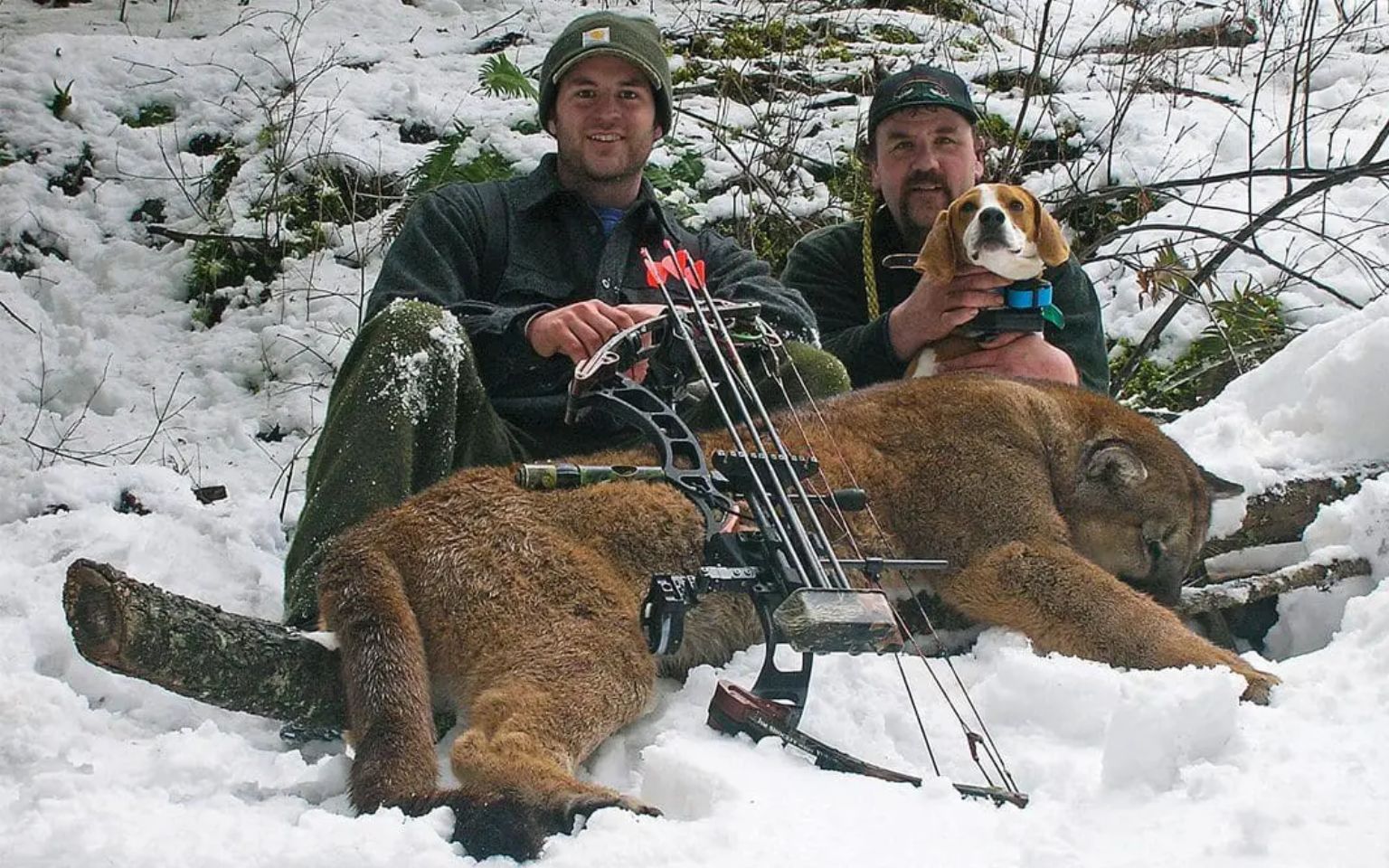
Mountain lion hunts are part of a broader wildlife management discussion surrounding one of North America’s largest native predators. Mountain lions are widely distributed across western portions of the continent and are known for their adaptability, solitary behavior, and ability to occupy large home ranges.
Also called cougars, pumas, or sometimes panthers, mountain lions play an important ecological role as predators. For anyone researching mountain lion hunts, understanding their habitat, behavior, population management, conservation, and state-specific regulations provides essential context.
Because wildlife laws differ significantly by location and can change, current regulations should always be confirmed with the responsible state or provincial wildlife authority.
Phone Number: 307-637-5495
Business Email: info@hunt-nation.com
Understanding the Mountain Lion
The mountain lion (Puma concolor) is a large cat native to the Americas. Despite its many common names, mountain lion, cougar, and puma generally refer to the same species.
Mountain lions are primarily solitary animals. Adults typically maintain individual home ranges, although those ranges may overlap.
Their physical adaptability allows them to live across varied landscapes. Rather than depending on one specific type of environment, they can occupy different habitats when sufficient prey, cover, and space are available.
Where Do Mountain Lions Live?
Mountain lions have an extensive geographic range in the Americas.
Within the United States, established populations are most strongly associated with western states, although their historical range was considerably broader.
Depending on the region, mountain lion habitat may include:
- Mountainous landscapes
- Forests and woodlands
- Rocky terrain
- Grasslands
- Desert environments
- Brush and canyon country
Local conditions matter considerably. Habitat quality, prey availability, development, human activity, and landscape connectivity can all influence where mountain lions occur.
For this reason, information about mountain lion hunting should always be considered within the context of a specific state or region.
Mountain Lion Behavior
Mountain lions are generally secretive and difficult to observe.
They tend to avoid people and rely heavily on cover and large landscapes. Their movement and habitat use can vary according to prey availability, season, reproduction, environmental conditions, and human disturbance.
Mountain lions are carnivores, with deer forming an important part of their diet in many areas. Their diet can vary geographically depending on available prey.
As predators, mountain lions form part of complex relationships involving prey populations, other predators, habitat conditions, and human land use.
Mountain Lion Hunts and Wildlife Management
Where legally permitted, mountain lion hunts operate within state or provincial wildlife management systems.
Wildlife agencies may use population research, mortality information, habitat data, and other biological information when developing management policies.
The exact objectives can differ substantially between jurisdictions.
Some regions may focus on maintaining particular population conditions, while others may be dealing with habitat limitations, livestock conflicts, or other local concerns.
This makes it inaccurate to apply one state’s mountain lion management approach to the entire country.
Why Mountain Lion Regulations Vary by State
Mountain lion hunting laws are not uniform across the United States.
Individual states determine whether hunting is permitted and establish their own wildlife regulations. Requirements can include seasons, licenses, management areas, reporting requirements, and other restrictions.
Other jurisdictions may prohibit recreational mountain lion hunting.
Anyone researching mountain lion hunts in the USA should therefore begin with the current regulations published by the wildlife agency responsible for the destination.
Older blog posts and forum discussions should not be treated as substitutes for current official regulations.
Mountain Lion Population Monitoring
Managing a secretive predator presents unique challenges.
Unlike wildlife that can be easily counted in large visible groups, mountain lions can be difficult to monitor directly. Wildlife researchers may use multiple forms of scientific evidence when studying their populations and distribution.
Monitoring can help agencies understand population trends, habitat use, reproduction, mortality, and relationships with prey.
This information can then contribute to management and conservation decisions.
Population conditions can differ between regions, making local research especially important.
Mountain Lions and Their Role in the Ecosystem
Mountain lions are major predators within the ecosystems they occupy.
Predators and prey exist within complicated ecological relationships. Changes involving habitat, prey availability, development, disease, weather, and other predators can influence wildlife populations in different ways.
For that reason, responsible mountain lion management involves looking beyond a single species.
Protecting functioning habitats and maintaining wildlife connectivity can benefit mountain lions as well as many other species sharing the same landscapes.
Habitat Connectivity and Conservation
Large predators require space.
Roads, residential development, expanding communities, and other forms of landscape fragmentation can affect how wildlife moves between suitable habitats.
Maintaining connections between habitat areas can be particularly important for populations that need to move across large landscapes.
Wildlife crossings, habitat conservation, research, and land-management programs can all form part of broader efforts to reduce conflicts between wildlife needs and human development.
Human and Mountain Lion Conflict
As human development expands into wildlife habitat, encounters involving people, livestock, pets, and mountain lions can occur.
The frequency and nature of these conflicts vary significantly by region.
Wildlife agencies may use education, monitoring, conflict-response programs, and other management approaches depending on local circumstances.
Residents of mountain lion country should rely on their state wildlife agency for current guidance about living around large predators and reporting unusual activity.
Why Destination-Specific Research Matters
Someone researching mountain lion hunts should pay close attention to the specific destination.
Wildlife populations, habitat, regulations, and management objectives can differ dramatically from one state to another.
Useful destination research should consider:
- Current legal status
- State wildlife regulations
- Regional mountain lion populations
- Habitat conditions
- Conservation policies
- Reporting requirements
- Changes to current seasons or management programs
These details should be verified before relying on them because wildlife regulations can change.
Conservation and Responsible Wildlife Management
Mountain lion conservation involves balancing several ecological and social considerations.
Wildlife agencies may consider predator populations, prey availability, habitat quality, livestock conflicts, public safety, development, and other factors when developing management policies.
There is no single management strategy that applies equally well everywhere.
That is why science-based monitoring and region-specific wildlife management remain important parts of mountain lion conservation.
Frequently Asked Questions About Mountain Lion Hunts
Are cougars and mountain lions the same animal?
Yes. Mountain lion, cougar, and puma are common names for Puma concolor.
Where do mountain lions live in the United States?
Established populations are primarily associated with western regions of the United States. Their distribution and population conditions vary by state.
Are mountain lion hunts legal everywhere?
No. Laws differ between jurisdictions. Some states permit regulated hunting under specific conditions, while others do not. Current rules should always be verified with the appropriate wildlife agency.
What do mountain lions eat?
Mountain lions are carnivores. Deer are an important prey source in many regions, although their diet varies depending on local wildlife populations.
Why are mountain lion populations monitored?
Monitoring helps wildlife agencies understand population trends, distribution, mortality, reproduction, habitat use, and other factors that can influence conservation and management decisions.
Why do mountain lion regulations differ by location?
States and provinces manage wildlife according to their own laws, population conditions, conservation goals, and local circumstances.
Understanding Mountain Lion Hunts in the Bigger Picture
Researching mountain lion hunts requires understanding more than the activity itself. Mountain lions are native predators whose populations are connected with habitat quality, prey availability, landscape connectivity, human development, and broader wildlife management.
Conditions also vary considerably across North America. A management approach or regulation in one state may be completely different somewhere else.
For that reason, anyone researching mountain lion hunting should combine general knowledge about the species with current, destination-specific information from the responsible wildlife authorities.
Learn More with Hunt Nation: https://www.hunt-nation.com/catalog-search/