
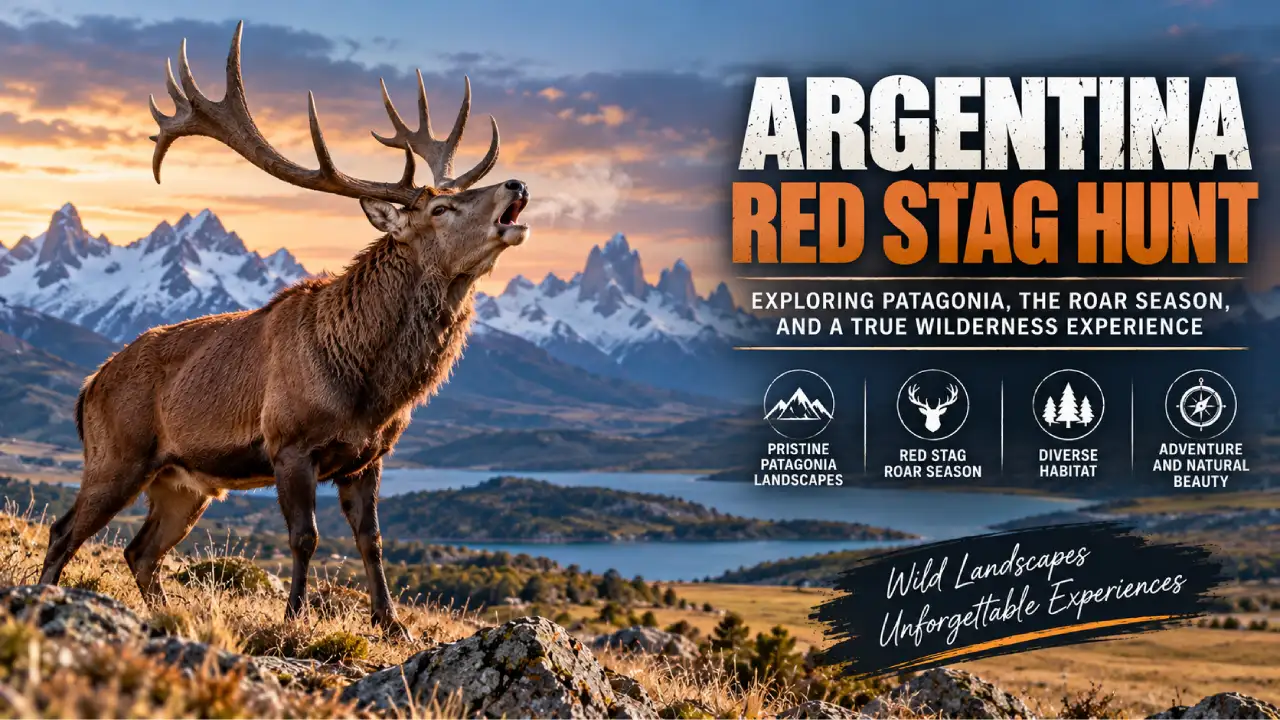
An Argentina Red Stag Hunt is commonly associated with the dramatic landscapes of Patagonia and the distinctive breeding calls of mature red stags during the fall. Argentina has developed an international reputation for red stag experiences, but the animals themselves and the environments they occupy are equally fascinating.
Red deer are not native to South America. They were introduced to Argentina and have since established populations in several regions, particularly parts of Patagonia.
Today, anyone researching Patagonia red stag, the red stag roar season, or wildlife travel in Argentina will encounter a combination of animal behavior, seasonal changes, varied landscapes, private properties, and local wildlife regulations.
Understanding those elements provides useful context before planning any wildlife-focused trip to Argentina.
Book Your Argentina Red Stag Hunt Adventure
📞 307-637-5495 | 📧 info@hunt-nation.com
Why Argentina Is Known for Red Stag
Argentina offers enormous geographic diversity.
The country stretches from subtropical environments in the north to the cold and windswept landscapes of Patagonia in the south. Between these extremes are grasslands, forests, mountains, agricultural areas, and large private ranches.
Red stag in Argentina are particularly associated with parts of Patagonia.
The region provides a visually dramatic setting containing mountains, valleys, forests, grasslands, lakes, and open country. Habitat varies considerably from one location to another, meaning red deer do not experience identical conditions throughout the region.
This landscape diversity has helped make Patagonia internationally recognizable among people interested in red deer and outdoor travel.
Understanding the Red Stag
A red stag is an adult male red deer.
Mature males are immediately recognizable by their antlers, particularly during the breeding season. Females are generally referred to as hinds.
Like other deer species, red deer experience predictable biological changes throughout the year.
Food availability, weather, daylight, reproduction, and habitat conditions all influence their behavior.
The most recognizable seasonal event is the red stag roar season, when breeding activity dramatically changes the behavior of mature males.
What Is the Red Stag Roar?
The “roar” refers to the vocalizations made by mature stags during the breeding season.
This period is comparable in broad biological terms to the rut of North American deer and elk.
As breeding activity increases, mature males become more vocal. Roaring communicates presence and plays a role in interactions between competing males and potential mates.
Visitors may hear these calls traveling considerable distances across suitable landscapes, particularly during periods when animals are actively communicating.
The sound has become one of the defining characteristics of Patagonia red stag season.
It is important, however, to understand that the roar is a natural reproductive behavior rather than simply an outdoor tourism event.
When Does the Roar Occur in Argentina?
Argentina is located in the Southern Hemisphere, so its seasons are opposite those of North America.
The red stag roar season generally takes place during the Southern Hemisphere fall, with March and April commonly associated with increased breeding activity.
Exact timing can vary.
Location, weather, individual animals, population structure, and environmental conditions can all influence observable activity.
For that reason, broad seasonal descriptions should not be treated as guarantees for one particular property or year.
Current local information is always more useful than assuming wildlife will follow an exact calendar.
Understanding Patagonia Red Stag Habitat
Patagonia red stag habitat can include several different landscape types.
Depending on location, animals may use:
- Open grasslands
- Forest edges
- Mountain valleys
- Brush-covered slopes
- Woodland
- Agricultural areas
- Large ranch landscapes
Food, water, security cover, and seasonal conditions influence how animals use these environments.
The transition between open ground and wooded habitat can be particularly important from an ecological perspective because it provides access to different resources within a relatively small area.
Habitat conditions can also vary dramatically with elevation.
This makes destination-specific research important when learning about Argentina red stag populations.
Free-Range Landscapes and Estancias
People researching red stag in Argentina will frequently encounter terms such as free-range and estancia.
An estancia is generally a ranch or large rural property. Estancias have played an important role in Argentina’s agricultural and cultural history, particularly in regions associated with livestock production.
Wildlife experiences can occur across different types of properties and management systems.
Because these systems are not identical, travelers should avoid assuming that every property operates under the same conditions.
Questions about land size, wildlife management, local regulations, accommodation, transportation, and the nature of a particular property should be researched individually.
Clear information helps travelers understand exactly what type of experience a destination provides.
Patagonia’s Changing Weather
Weather is an important consideration for any trip to Patagonia.
The region has a reputation for strong winds and rapidly changing conditions, although climate varies substantially according to location and elevation.
A relatively comfortable day can be followed by much colder conditions.
Mountain environments introduce additional variability.
Visitors should therefore research the climate of the specific region they intend to visit rather than relying on a general forecast for Argentina.
The distances involved are simply too large for one description to accurately represent the entire country.
Physical Demands of Patagonia Travel
Outdoor travel in Patagonia can range from relatively accessible rural environments to demanding mountainous terrain.
Uneven ground, elevation changes, wind, cold temperatures, and long periods outdoors can increase the physical demands of a trip.
Anyone preparing for a remote Patagonia experience should have realistic expectations about the destination.
General fitness, appropriate clothing, weather awareness, and familiarity with outdoor travel can all contribute to a more comfortable experience.
However, the exact requirements depend heavily on location.
A mountain-based destination and a more accessible estancia may offer very different physical experiences.
Wildlife Management in Argentina
The presence of introduced red deer creates wildlife-management considerations that differ from those surrounding native species.
Management decisions can involve population conditions, habitat impacts, land use, conservation objectives, and regional regulations.
These considerations may vary across provinces and individual properties.
This is another reason broad claims about Argentina big game management can be misleading.
Travelers and researchers should distinguish between general information about the species and the specific rules governing a particular destination.
Current government and local regulatory information should always take priority.
Travel and Documentation Considerations
International travel requires more preparation than domestic travel.
Anyone visiting Argentina should verify current requirements concerning passports, entry conditions, transportation, local laws, and any documentation relevant to their planned activities.
Requirements can change over time.
Information from an older travel article may therefore be outdated even if the general description of Patagonia remains useful.
Travelers should use current government sources and appropriate local authorities when confirming legal requirements.
Planning also needs to account for the size of Argentina. Reaching a remote Patagonia destination may involve domestic flights and additional ground transportation after arriving in the country.
The Cultural Side of Patagonia
Patagonia is not defined only by wildlife.
The region has a strong ranching heritage and distinctive local communities. Argentina’s rural culture, livestock traditions, food, and hospitality can become an important part of the overall travel experience.
Estancias are closely tied to this history.
Learning about the local culture adds depth to a Patagonia trip and helps visitors understand how people have lived and worked across these landscapes for generations.
Responsible travel should therefore include respect for local communities, private property, regional traditions, and natural environments.
Conservation and Responsible Wildlife Tourism
Responsible wildlife travel depends on accurate information and respect for local ecosystems.
Visitors should understand that regulations, land-management systems, and conservation priorities can differ between regions.
Following local rules and respecting wildlife habitat are fundamental expectations.
Responsible tourism can also encourage greater appreciation for landscapes that support many species beyond red deer.
Patagonia contains diverse ecosystems with native mammals, birds, plants, and aquatic life.
The red stag roar may attract attention, but it takes place within a much larger ecological landscape.
Frequently Asked Questions
When is the red stag roar season in Argentina?
The red stag roar season generally occurs during the Southern Hemisphere fall, with March and April commonly associated with breeding activity. Exact timing varies according to location and environmental conditions.
Where are red stag found in Argentina?
Established red deer populations occur in several parts of Argentina and are particularly associated with Patagonia. Habitat can include forests, grasslands, mountain valleys, brushy country, and ranch landscapes.
What is an estancia in Argentina?
An estancia is a ranch or large rural property. Estancias are an important part of Argentina’s agricultural history and can vary considerably in size, landscape, accommodations, and wildlife-management practices.
Conclusion
An Argentina Red Stag Hunt is closely associated with one of the most recognizable seasonal wildlife events in Patagonia: the roar of mature stags during the fall breeding period.
Yet the experience is shaped by far more than one season.
Book Your Argentina Red Stag Hunt Adventure
📞 307-637-5495 | 📧 info@hunt-nation.com
Patagonia’s mountains, valleys, forests, ranches, changing weather, red stag behavior, local culture, and wildlife-management systems all contribute to the character of the region.
For anyone researching Patagonia red stag, red stag roar season, Argentina red stag, or Argentina big game, understanding the animal and destination provides essential context.
The most responsible approach is to combine reliable wildlife information with current local regulations and thoughtful travel planning.